The Device on Your Wrist May Know Something Your Doctor Doesn't — Yet
The Device on Your Wrist May Know Something Your Doctor Doesn't — Yet
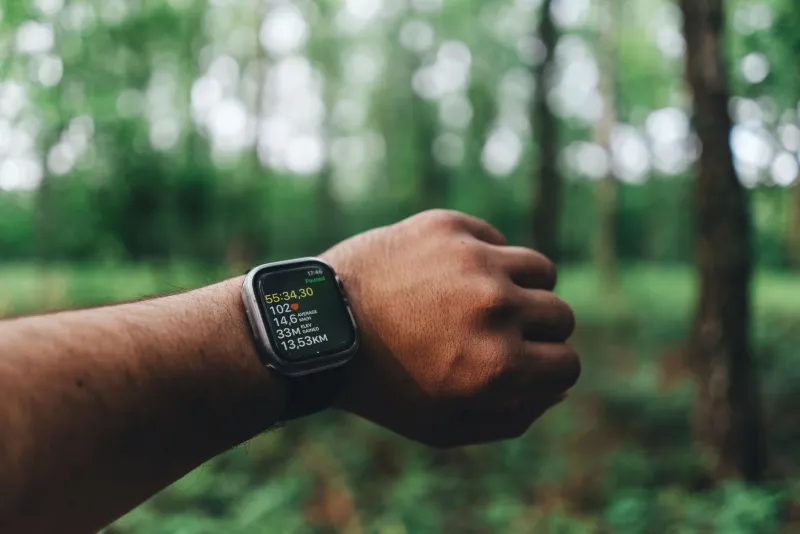
Most Americans put on their smartwatch in the morning the same way they put on a belt — habitually, without much thought. They glance at step counts during a lunch break. They check a resting heart rate before bed. What they rarely consider is that the sensor pressed quietly against their wrist is conducting a continuous, passive health surveillance that no scheduled appointment can replicate.
This is not a future scenario. It is happening now, in living rooms and office hallways and grocery store parking lots across the country. Wearable technology has crossed a threshold that few anticipated so quickly: it is detecting disease before patients feel sick, before symptoms become undeniable, and — in documented cases — before physicians have had the opportunity to run a single test.
From Fitness Gadget to Clinical Instrument
The transformation of consumer wearables into credible health monitoring tools has been gradual but decisive. Early fitness trackers counted steps and estimated calories. Today's leading devices measure electrocardiogram activity, blood oxygen saturation, skin temperature variation, respiratory rate, and heart rate variability — metrics that, in another context, would require dedicated clinical equipment and a trained technician to obtain.
The Food and Drug Administration has cleared several wearable ECG features for detecting atrial fibrillation, a heart rhythm disorder affecting an estimated 2.7 to 6.1 million Americans. AFib frequently presents without obvious symptoms, yet it significantly elevates the risk of stroke. For individuals who would otherwise go years without a formal cardiac evaluation, a wearable device generating an AFib alert represents a genuinely consequential intervention.
Blood oxygen monitoring has added another dimension. During the height of the COVID-19 pandemic, pulse oximetry readings on consumer smartwatches prompted thousands of users to seek care before their respiratory distress reached emergency thresholds. Physicians reported patients arriving with documented oxygen trends from their devices — data that informed clinical decisions almost immediately.
Real Alerts, Real Diagnoses
The anecdotal record is substantial and growing. Across online health communities, cardiology waiting rooms, and published case studies, a recurring story has emerged: a person receives an unexpected notification from their wearable device, dismisses it initially, receives it again, and eventually contacts a physician — only to learn that the alert was clinically accurate.
In one widely reported case, a man in his early forties received repeated irregular rhythm notifications from his smartwatch over the course of several days. He had no chest pain, no shortness of breath, no fatigue beyond what he attributed to a demanding work schedule. A cardiologist confirmed AFib. He was started on anticoagulation therapy. His physician later told him the detection likely prevented a stroke.
Similar accounts involve sleep apnea identified through overnight blood oxygen dips, early signs of anemia flagged through resting heart rate elevation, and even preliminary indicators of thyroid dysfunction suggested by sustained heart rate irregularities. These are not diagnoses made by a device. They are signals — often precise and reproducible signals — that prompt the clinical encounters where actual diagnoses are made.
That distinction is critical, and it is one that the public health community must communicate clearly.
The Step Most People Miss
Wearable technology is exceptionally good at generating data. It is entirely dependent on the user to determine what to do with it.
This is where the promise of passive monitoring most frequently breaks down. Surveys conducted by health technology researchers consistently find that a significant portion of wearable users who receive health alerts either ignore them outright, attribute them to device error, or intend to follow up and never do. The same psychological barriers that delay traditional medical appointments — minimization, fear, inconvenience, cost — apply equally to acting on a wearable alert.
Understanding when an alert warrants immediate action versus a scheduled consultation is not intuitive for most people. As a general framework, physicians and public health professionals recommend the following:
Seek emergency care immediately if a wearable alert is accompanied by chest pain, difficulty breathing, sudden dizziness, fainting, or severe fatigue. The device is flagging something in real time; do not wait.
Contact your physician within 24 to 48 hours if you receive a repeated irregular rhythm notification, a sustained low blood oxygen reading below 94 percent, or a resting heart rate that is significantly elevated or depressed from your personal baseline without an obvious explanation such as illness or exertion.
Schedule a routine appointment if you observe a gradual trend over days or weeks — a slowly rising resting heart rate, declining heart rate variability, or disrupted sleep patterns that the device is consistently logging. These may indicate something developing rather than something acute, but they warrant clinical evaluation.
The device cannot make this judgment for you. Knowing how to escalate the signal is the skill that transforms a consumer product into a genuine health intervention.
Limitations That Cannot Be Ignored
Responsible engagement with wearable health data requires acknowledging what these devices cannot do.
Consumer wearables are not medical-grade diagnostic instruments in all respects. ECG readings on a smartwatch are single-lead measurements — useful for detecting certain arrhythmias but far less comprehensive than a clinical 12-lead ECG. Blood oxygen readings can be affected by skin tone, device fit, movement, and ambient temperature. False positives occur, and they carry their own risk: unnecessary anxiety, avoidable medical visits, and the erosion of trust in future alerts that may be clinically significant.
There is also the matter of health equity. Wearable devices capable of meaningful health monitoring carry price points that place them beyond the reach of many lower-income Americans — the same populations that already face disproportionate barriers to preventive care. The technology's potential to democratize early detection is real, but it remains unevenly distributed.
Finally, no wearable replaces the scheduled physical examination, the laboratory panel, the imaging study, or the clinical relationship with a physician who knows a patient's full history. These devices are a complement to the healthcare system, not a substitute for it.
A New Kind of Vigilance
The core mission of early detection has always been straightforward: identify a health threat before it advances beyond the point of effective intervention. For generations, that mission depended entirely on a patient recognizing a symptom, deciding it was serious enough to pursue, scheduling an appointment, and following through. Every one of those steps represented an opportunity for the condition to go undetected.
Wearable technology introduces a new variable into that equation. It removes the requirement that a person feel sick before the monitoring begins. It operates continuously, without the psychological resistance that keeps millions of Americans from calling their doctor. And when it works as intended, it compresses the timeline between the first detectable signal and the clinical response.
The device on your wrist is not a physician. But in a country where too many conditions are first discovered in an emergency room rather than a doctor's office, it may be the most consistent early warning system millions of Americans currently have access to.
See it. Act on it. That is where the technology ends and the responsibility begins.