The Checkup He Never Scheduled: Why American Men Are Losing a War They Don't Know They're Fighting
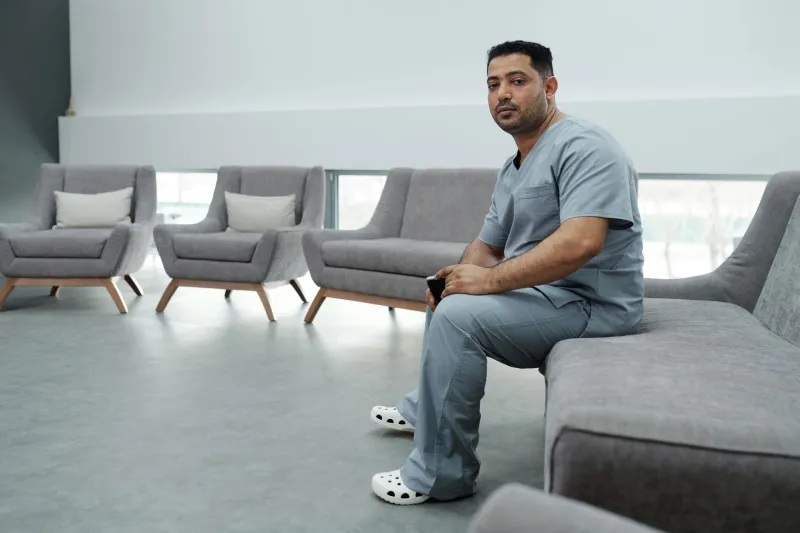
The Checkup He Never Scheduled: Why American Men Are Losing a War They Don't Know They're Fighting
He has not seen a physician in four years. He noticed the fatigue months ago but attributed it to long hours at work. The dull ache that surfaces occasionally — manageable, he tells himself — has not prompted a single call to a primary care office. He is not unusual. According to the Agency for Healthcare Research and Quality, men are significantly less likely than women to have visited a doctor in the past year, less likely to report early symptoms, and far less likely to schedule preventive screenings. The result is a quiet, ongoing public health emergency hiding in plain sight.
Across the United States, men are dying earlier than women from nearly every leading cause of death — heart disease, cancer, stroke, diabetes, and chronic liver disease among them. The gap is not primarily genetic. It is behavioral. And behavior, unlike biology, can be changed.
The Culture of Toughness That Becomes a Medical Liability
American men are raised in a cultural environment that prizes endurance over vulnerability. Seeking help — for mental health struggles, for physical symptoms, for anything that might signal weakness — runs counter to an identity many men have spent decades constructing. The physician's office, in this framework, is not a resource. It is a risk. A risk of hearing something unwelcome. A risk of being seen as someone who could not handle whatever was happening on his own.
This psychological architecture has measurable consequences. Research published in the Journal of Health and Social Behavior has consistently demonstrated that men who most strongly endorse traditional masculine norms are the least likely to engage in preventive health behaviors. They delay seeking care, underreport symptoms, and are more likely to present to emergency departments with conditions that — had they been caught earlier — would have been far more manageable.
Fear of diagnosis is a particularly potent deterrent. Many men report avoiding screenings not because they believe nothing is wrong, but precisely because they suspect something might be. This counterintuitive logic — steering clear of the test because the result might be bad — transforms the very tool designed to save a life into something that feels threatening.
What the Numbers Actually Reveal
Consider prostate cancer, one of the most common malignancies affecting American men. When detected at the localized stage, the five-year survival rate exceeds 99 percent. When detected after metastasis, that figure drops to approximately 32 percent. The disease itself did not change. What changed was the moment of discovery.
Colorectal cancer follows a similar pattern. The American Cancer Society estimates that roughly 150,000 Americans are diagnosed annually, yet colonoscopy screening rates among eligible men remain well below recommended targets. Many of those diagnoses arrive after symptoms have become impossible to ignore — which, in oncological terms, frequently means the window for straightforward intervention has already closed.
Cardiovascular disease presents perhaps the starkest illustration. Men develop heart disease earlier than women, on average, and are more likely to experience a fatal cardiac event as their first clinical presentation. Hypertension, elevated cholesterol, and blood glucose abnormalities — all detectable through routine screening — often precede that event by years. Years during which a conversation with a physician, a medication adjustment, or a lifestyle modification could have rewritten the outcome entirely.
Systemic Barriers Compound Individual Avoidance
Cultural psychology does not act alone. The American healthcare system presents structural obstacles that disproportionately affect men, particularly those without stable employment, comprehensive insurance, or access to primary care in their geographic area.
Approximately 14 percent of American men under 65 are uninsured, compared to roughly 11 percent of women in the same age range. Men are also less likely to qualify for Medicaid in states with restrictive eligibility criteria, and less likely to have sought out coverage through marketplace exchanges. Without insurance, the cost of a primary care visit — let alone a colonoscopy, a lipid panel, or a prostate-specific antigen test — becomes a genuine financial obstacle rather than a scheduling inconvenience.
In rural communities, the barrier compounds further. A man living in a county without a primary care physician within reasonable driving distance faces a logistical challenge that no amount of health literacy or personal motivation fully resolves. Telehealth has begun to address some of this gap, but physical examinations and many diagnostic screenings still require in-person access.
The People Around Him May Be His Best Asset
Research on health behavior change consistently identifies social support as one of the most reliable predictors of whether an individual will seek care. For men who are resistant to self-initiated engagement with the medical system, partners, spouses, adult children, and close friends often serve as the catalyst that moves intention into action.
This is not a passive role. Studies have found that women, in particular, frequently function as health managers for their households — scheduling appointments, tracking symptoms, and encouraging care-seeking among the men in their lives. This dynamic, while worth examining critically from a gender equity standpoint, also represents a genuine public health lever. A spouse who frames a screening appointment as a shared act of care rather than a personal admission of vulnerability may accomplish what years of public awareness campaigns have not.
Employers, too, have an underutilized role. Workplace wellness programs that bring screenings directly to employees — blood pressure checks, glucose testing, cholesterol panels — remove several layers of friction simultaneously. The man who would not schedule a doctor's appointment may nonetheless roll up his sleeve when a mobile health unit parks in the company lot on a Tuesday afternoon.
Practical Entry Points for Men Who Have Delayed Too Long
For men who have not engaged with preventive care in years, the prospect of re-entering the medical system can feel overwhelming. A useful reframe: the goal is not to solve everything at once. It is to begin.
A single primary care visit — ideally with a physician who has been selected based on comfort and communication style rather than pure convenience — can generate a baseline picture of cardiovascular risk, flag abnormal values in routine bloodwork, and initiate referrals for age-appropriate screenings. The United States Preventive Services Task Force publishes clear, evidence-based recommendations for screening by age and risk category, and many are available without a specialist referral.
For men who distrust the traditional medical system, community health centers, federally qualified health clinics, and nonprofit screening programs offer alternative entry points. Many operate on sliding-scale fees and are specifically designed to serve populations that have historically been underserved by conventional care settings.
For men who are not yet ready to walk through any door, at-home screening tools — including mail-in colorectal cancer tests and blood pressure monitors available at most pharmacies — provide a lower-stakes first step. These tools are not substitutes for comprehensive care, but they can surface findings that compel action.
The Cost of Continuing to Wait
Every year without a screening is not a neutral year. It is a year during which a detectable condition may be advancing without opposition. The mathematics of early detection are unambiguous: the earlier a disease is identified, the greater the range of available interventions, the lower the cost of treatment, and the higher the probability of a full recovery.
American men are not losing this fight because the tools to win it do not exist. They are losing it because too many of them never pick up those tools. The waiting room they never enter is not merely an inconvenience — it is the place where their odds were best, and where they chose not to go.
That choice is still available. It is available today.