Twice a Year, Your Dentist May Be Saving Your Life Without You Knowing It
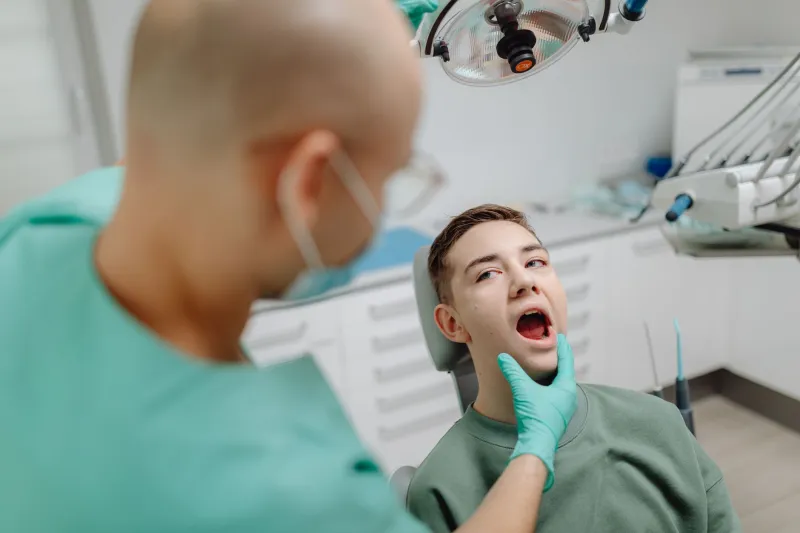
For most Americans, a dental appointment sits somewhere between an oil change and a tax filing on the list of obligations they'd rather avoid. You go, you get scraped and polished, you leave with a small bag of floss you'll use twice and forget. What almost nobody considers is that the person peering into your mouth with a headlamp and a metal pick may be looking at far more than your teeth.
Dentists in the United States are increasingly positioned — by training, by proximity, and by routine access — to detect some of the most dangerous and commonly missed diseases in the country. Oral cancer, type 2 diabetes, and cardiovascular disease all leave early markers in the mouth, often before a patient has any reason to suspect something is wrong. And yet, millions of Americans skip dental visits every year, unknowingly bypassing a checkpoint that could catch a life-threatening condition before it becomes one.
The Mouth as a Window Into Systemic Health
The connection between oral health and whole-body health is not new science — it is simply underappreciated by the public. The mouth is a living diagnostic environment. Its tissues, saliva, gum line, and even the pattern of bone loss visible on dental X-rays carry information that extends well beyond tooth decay.
Clinicians have long recognized that periodontal disease — chronic inflammation of the gums — is associated with elevated cardiovascular risk. The bacteria responsible for gum disease can enter the bloodstream through inflamed tissue, contributing to arterial inflammation and increasing the likelihood of heart attack and stroke. A dentist who notices persistent, unexplained gum disease in a patient with no obvious hygiene explanation may be looking at an early indicator of systemic cardiovascular stress, even before a primary care physician has flagged any concern.
Similarly, the oral cavity reflects metabolic function in ways that are measurable and specific. Patients with undiagnosed or poorly controlled type 2 diabetes frequently present with recurring gum infections, slow-healing oral wounds, dry mouth, and a distinctive pattern of bone deterioration around the teeth. For the estimated 8.7 million Americans living with undiagnosed diabetes, a dentist paying close attention may be the first clinician to raise the alarm.
Oral Cancer: The Disease That Hides in Plain Sight
Of all the conditions a dentist is positioned to detect, oral cancer carries perhaps the most urgent argument for routine care. Approximately 58,000 Americans are diagnosed with oral or oropharyngeal cancer each year, according to the American Cancer Society. The five-year survival rate when the disease is caught at an early, localized stage exceeds 85 percent. When it is diagnosed after it has spread to lymph nodes or distant tissue, that figure drops dramatically.
The challenge is that early-stage oral cancer is often painless and visually subtle. A small white or red patch on the tongue, a sore that doesn't heal within two weeks, a thickened area on the inner cheek — these are the kinds of findings that a patient would never think to report and might not notice at all. A trained dentist conducting a systematic oral cancer screening, which takes only a few minutes and is standard practice in thorough exams, is specifically looking for these markers.
Risk factors including tobacco use, heavy alcohol consumption, and infection with human papillomavirus (HPV) — now the leading cause of oropharyngeal cancers in the United States — make regular screenings especially critical for certain populations. But because early-stage lesions can appear in patients with no obvious risk factors, the screening is valuable across the board.
What a Dentist Sees That You Don't
Beyond cancer and diabetes, the dental exam captures a surprisingly broad range of clinical signals. Tooth erosion patterns can indicate chronic acid reflux or eating disorders. Worn, flattened teeth may point to sleep bruxism, which is itself associated with sleep apnea — a condition linked to elevated blood pressure, cognitive impairment, and cardiovascular events. Unusual tooth mobility or accelerated bone loss on X-rays can be an early marker of osteoporosis, particularly in postmenopausal women.
Some dental practices have begun incorporating adjunctive screening tools: specialized lights that cause abnormal tissue to fluoresce differently from healthy tissue, or salivary diagnostic tests that can detect inflammatory markers associated with systemic disease. While these technologies are not yet universally available, their growing adoption reflects a broader shift in how the dental profession understands its role in the healthcare ecosystem.
Dentists are also, in many cases, the only healthcare provider a patient sees on a consistent schedule. Among Americans who avoid primary care — whether due to cost, distrust, logistical barriers, or simple habit — a dental appointment may represent the single most reliable point of clinical contact. That makes the dental chair, for many people, the first and only opportunity for a trained professional to observe their health up close.
The Access Problem — and Why It Matters
None of this diagnostic potential is realized if people don't show up. Roughly one-third of American adults have not seen a dentist in the past year, according to data from the Centers for Disease Control and Prevention. Cost is the most commonly cited barrier — dental coverage remains inconsistently included in health insurance plans, and Medicare, the primary insurer for Americans over 65, has historically provided limited dental benefits.
This gap in access falls disproportionately on the populations already at highest risk for the conditions a dental exam might detect: lower-income adults, older Americans, and those living in rural areas with limited provider availability. The result is a compounding disadvantage — the people who most need an early warning are least likely to receive one.
Community health centers, federally qualified health clinics, and dental school clinics offer reduced-cost or sliding-scale care in many parts of the country and represent meaningful options for those without traditional coverage. For those with insurance, confirming that dental benefits are included and using them consistently is, quite literally, a matter of health.
Reframing the Appointment
The cultural perception of the dental visit needs to change. It is not a cosmetic errand or a grudging act of personal maintenance. It is a clinical encounter with a trained professional who is looking at tissue, bone, and biological markers that tell a story about your health — a story that may include chapters your physician hasn't reached yet.
If you have been postponing your next cleaning, consider what you may be postponing alongside it: the chance to catch something early, when catching it still means everything. Oral cancer found at stage one is a very different diagnosis than oral cancer found at stage four. Diabetes identified through a dental referral before symptoms emerge is a very different trajectory than diabetes diagnosed in an emergency room after years of silent damage.
See it early. Stop it in its tracks. The dentist's chair is not where you go to maintain your smile. It may be where you go to save your life.