The Prescription Counter Is a Health Checkpoint: Why Your Pharmacist May Be Your Best Early Warning System
The Professional Standing Between You and a Missed Diagnosis
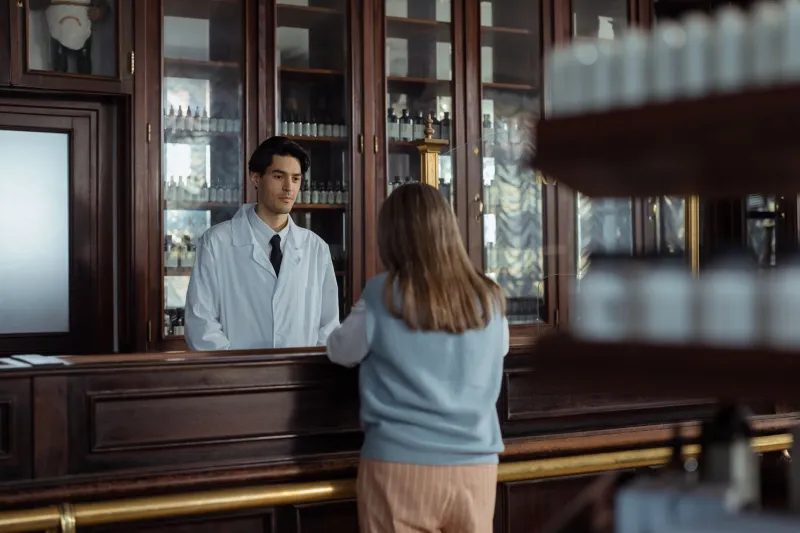
Consider a routine Tuesday afternoon at any chain pharmacy in America. A man in his fifties collects a refill for a cholesterol medication he has taken for years. The pharmacist glances at his profile, notices he has also recently filled a prescription for a diuretic, and asks a single question: Has anyone checked your blood pressure recently? The answer — that it has not been checked in over two years — prompts a quick reading at the in-store kiosk. The result is alarming enough to warrant a same-day call to his physician.
This scenario is not unusual. It is, in fact, happening in pharmacies across every state in the country, often without patients fully appreciating what has just occurred. A potential crisis has been intercepted — not in an emergency room, not during a belated specialist visit, but at a retail counter between a prescription bag and a credit card terminal.
Pharmacists are among the most accessible and chronically underutilized frontline clinicians in the American healthcare system. According to the American Pharmacists Association, the average American visits a pharmacy approximately twelve times per year, compared to fewer than four visits to a primary care provider. That gap is not merely logistical — it is a window of opportunity that preventive medicine has only recently begun to examine seriously.
What Pharmacists Are Actually Trained to See
The public perception of a pharmacist is often limited to someone who counts pills and prints labels. The clinical reality is considerably more complex. Licensed pharmacists in the United States complete a minimum of four years of graduate-level pharmacy education — a Doctor of Pharmacy degree — covering pharmacology, pathophysiology, patient counseling, and disease state management. Many complete additional residencies or board certifications in specialty areas including ambulatory care, diabetes, and cardiovascular disease.
This training equips pharmacists to recognize patterns that others might overlook. When a patient fills multiple prescriptions for medications that collectively suggest an unmanaged or worsening condition, a trained pharmacist can identify that trajectory. When a customer requests an over-the-counter product that may indicate an underlying problem — frequent purchases of antacids, for example, or recurring requests for urinary tract infection treatments — a pharmacist is positioned to ask the question that redirects a patient toward proper evaluation.
Specific conditions that pharmacists are known to flag include:
- Uncontrolled hypertension, identified through in-store blood pressure readings or through medication profiles showing escalating antihypertensive dosages without apparent physician follow-up
- Prediabetes and early-stage type 2 diabetes, recognized through patterns of medication use, patient-reported symptoms such as increased thirst or frequent urination, or abnormal readings from in-store glucose monitoring services
- Thyroid dysfunction, suggested by symptom clusters that patients may describe casually during counseling conversations
- Medication-induced complications, including kidney stress, liver strain, or electrolyte imbalances that can emerge as serious conditions if left unaddressed
- Potential drug interactions that may be producing symptoms a patient has not yet connected to their medication regimen
The Structural Gap Pharmacists Are Filling
The United States faces a well-documented shortage of primary care physicians, particularly in rural and lower-income urban communities. The Health Resources and Services Administration estimates that tens of millions of Americans live in areas formally designated as primary care shortage zones. In these communities, the local pharmacy is frequently the most consistent point of contact a patient has with any healthcare professional.
Even in areas with adequate physician access, appointment availability creates its own barrier. Patients experiencing subtle or ambiguous symptoms often rationalize delaying a doctor's visit — the wait is too long, the concern feels insufficiently serious, or the cost of an office visit creates hesitation. The pharmacy, by contrast, requires no appointment, no copay for a brief conversation, and no formal referral.
This structural reality has prompted a growing number of states to expand pharmacist scope-of-practice laws, allowing pharmacists to administer vaccines, conduct point-of-care testing, prescribe certain medications under collaborative practice agreements, and provide clinical screenings for conditions including hypertension, hyperlipidemia, and diabetes. States such as California, Washington, and New Mexico have been particularly active in codifying these expanded roles.
What to Ask the Next Time You Pick Up a Prescription
Most patients collect their medications without initiating any clinical conversation. The pharmacist asks if there are any questions; the patient says no; the transaction ends. Reversing this pattern requires only modest effort, and the return on that effort can be significant.
The next time you stand at the pickup counter, consider asking:
-
"Are all of my current medications still appropriate together?" Medication regimens evolve over time, and a pharmacist conducting a comprehensive medication review may identify combinations that warrant a conversation with your prescriber.
-
"Are there any symptoms I should be watching for with this medication?" Side effects can masquerade as new conditions, and knowing what to monitor protects you from unnecessary alarm — or from dismissing something genuinely important.
-
"Given what I take, is there anything I should be screened for?" This open-ended question invites the pharmacist to apply their clinical knowledge to your specific profile.
-
"Does my pharmacy offer any health screenings?" Many major chains and independent pharmacies offer blood pressure checks, blood glucose testing, and cholesterol screenings — sometimes at no cost.
-
"Is there anything in my prescription history that suggests I should follow up with my doctor?" This question explicitly invites the pharmacist into a clinical advisory role that their training has prepared them for, even if their daily workflow does not always create space for it.
When the Counter Becomes a Turning Point
In communities where See It & Stop It's core mission resonates most urgently — among patients who have delayed care, who lack consistent access to a physician, or who simply do not recognize the early signals their bodies are sending — the pharmacy represents something genuinely powerful: a low-barrier, high-frequency touchpoint with a trained clinician.
A pharmacist in a Midwest grocery store once noticed that an elderly woman had filled prescriptions for a diuretic, a potassium supplement, and a sleep aid in rapid succession. The combination prompted a counseling conversation that revealed the patient had been experiencing significant swelling in her legs and shortness of breath at night — symptoms she had attributed to aging. The pharmacist recommended urgent follow-up. The diagnosis was early-stage heart failure.
She had not yet seen it for what it was. The pharmacist did.
See It at the Counter. Stop It Before It Progresses.
Early detection does not always begin with a formal screening program, a specialist referral, or a scheduled annual exam. Sometimes it begins with a question asked over a prescription bag by someone who noticed something the patient had not thought to mention.
The pharmacist standing behind that counter has spent years learning to connect the dots between medications, symptoms, and disease. The only thing standing between that knowledge and your health is the assumption that a pharmacy visit is a transaction rather than a clinical encounter.
It does not have to be. The next time you pick up a prescription, treat the counter as the checkpoint it already is. Ask the question. Start the conversation. The two minutes you invest may return years you did not know were at risk.