When 'It's Probably Nothing' Becomes the Most Dangerous Sentence in Medicine
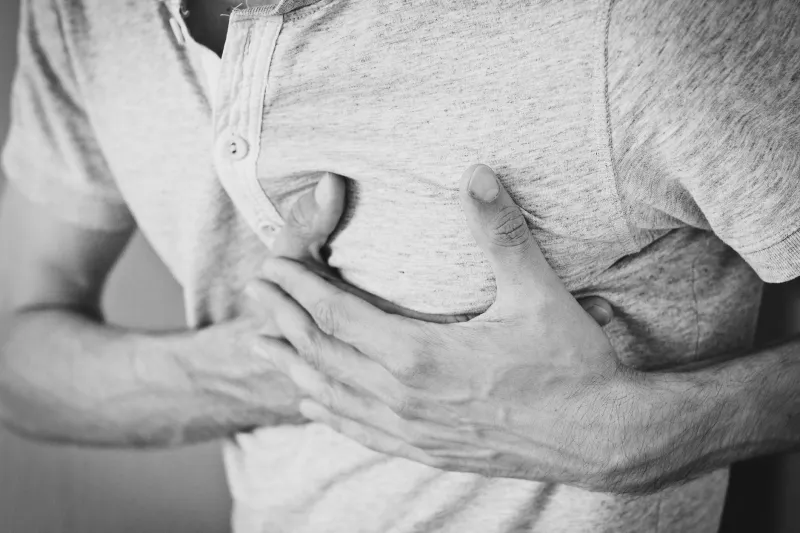
The Moment That Changes Everything — and the Hesitation That Makes It Worse
It begins with a sensation most people would describe as unremarkable. A tightness across the chest. A strange heaviness in one arm. A brief blurring of vision that clears up almost as quickly as it arrived. The internal negotiation that follows is almost universal: Was that real? Am I overreacting? I'll see how I feel in an hour.
That hour — and the hours that sometimes follow — can permanently alter the trajectory of a person's life.
Across the United States, emergency physicians and neurologists tell a version of the same story with frustrating regularity. Patients arrive in the emergency department not in the immediate aftermath of their first alarming symptom, but hours — sometimes days — later, after the window for effective treatment has quietly closed. The cause is rarely ignorance. More often, it is a deeply ingrained cultural habit of minimization: the belief that seeking emergency care for something that might be serious is an overreaction, an inconvenience, or simply not who we are.
That belief is costing lives.
The Biology of the Window
Certain medical emergencies are fundamentally time-dependent. Stroke, heart attack, pulmonary embolism, and aortic dissection are not conditions that simply worsen gradually over days. They operate on timelines measured in minutes, and the treatments available for them — clot-dissolving medications, catheter-based interventions, surgical repair — become less effective or entirely unavailable as time passes.
In the case of ischemic stroke, the most common type, brain cells begin dying at a rate of approximately 1.9 million per minute once blood flow is interrupted. The clot-busting drug tPA (tissue plasminogen activator) is only eligible for administration within a narrow window of symptom onset — and that window requires a patient to actually be in a hospital, evaluated and imaged, before the clock runs out. Every minute of hesitation at home is a minute subtracted from the time available for physicians to act.
For heart attacks, the equation is similarly unforgiving. The goal in most hospital systems is to restore blood flow within 90 minutes of a patient's arrival — a benchmark known as door-to-balloon time. But that clock does not start until the patient walks through the door. If a person spends three hours convincing themselves that their chest pressure is acid reflux, those are three hours of cardiac muscle that may not recover.
The Symptoms Americans Most Commonly Dismiss
Understanding which symptoms warrant immediate evaluation — rather than watchful waiting — is one of the most important pieces of health knowledge any adult can carry. The following are among the most frequently minimized warning signs in emergency medicine:
Chest discomfort, pressure, or tightness. This does not always feel like the dramatic, crushing pain depicted in film and television. For many people — and particularly for women — a heart attack may present as pressure, fullness, squeezing, or even a vague ache. Dismissing it as indigestion or muscle strain is extraordinarily common and extraordinarily dangerous.
Sudden weakness or numbness on one side of the body. This is a hallmark warning sign of stroke. When it appears and then resolves — a transient ischemic attack, or TIA — many people feel relieved and do not seek care. This is a critical mistake. A TIA is a medical emergency that signals high near-term stroke risk and demands urgent evaluation.
Sudden changes in vision. Blurred vision in one eye, double vision, or a sudden loss of part of the visual field can indicate stroke, retinal artery occlusion, or other time-sensitive vascular events. Vision that returns to normal is not reassurance — it is a warning.
Severe headache with no prior history. Neurologists refer to it as a "thunderclap headache" — a pain that reaches maximum intensity almost instantaneously and feels unlike anything the person has experienced before. This pattern can indicate a subarachnoid hemorrhage, a bleeding event in the brain that is fatal if not treated promptly.
Sudden difficulty speaking or understanding speech. Slurred words, inability to find language, or confusion about what others are saying can all signal stroke. Like other neurological symptoms, these may fluctuate or briefly resolve — which does not reduce their urgency.
A Framework for the Critical Decision
The question most people ask themselves in these moments — Is this serious enough? — is the wrong question. The right question is: Could this be serious? When the answer is yes, the appropriate response is not to monitor symptoms from the couch. It is to call 911 or seek emergency evaluation immediately.
The following framework can help clarify when to act without delay:
Act immediately — call 911 — if you experience:
- Chest pain, pressure, or tightness lasting more than a few minutes, especially with sweating, nausea, or shortness of breath
- Sudden numbness or weakness in the face, arm, or leg, particularly on one side
- Sudden severe headache with no explainable cause
- Sudden confusion, trouble speaking, or difficulty understanding others
- Sudden vision changes in one or both eyes
- Sudden difficulty walking, loss of balance, or unexplained dizziness
Do not drive yourself. Emergency medical services can begin assessment and treatment before you reach the hospital. In the case of stroke, paramedics can pre-notify the hospital so that a stroke team is assembled before your arrival — a practice that meaningfully compresses treatment timelines.
Do not wait for a second opinion from a family member or an internet search. Both introduce delay. Neither can image your brain or interpret an electrocardiogram.
The Cultural Shift We Need
The reluctance to seek emergency care is not a personal failing. It is the product of a culture that equates stoicism with strength, that worries about wasting a physician's time, that dreads the financial implications of an emergency department visit, and that has been conditioned to believe that symptoms must be severe and undeniable before they merit attention.
This culture is lethal in the context of time-sensitive emergencies.
Insurance coverage for emergency care is federally protected under the Emergency Medical Treatment and Labor Act (EMTALA), which requires hospitals to evaluate and stabilize patients regardless of their ability to pay or insurance status. Financial concern, while understandable, should not be the variable that determines whether someone receives evaluation for a potential stroke or heart attack.
Public health research consistently demonstrates that patient-side delay — the time between symptom onset and the decision to seek care — is the single largest contributor to poor outcomes in stroke and cardiac events. Hospital systems have invested enormously in reducing treatment times once patients arrive. The gap that remains is the one between the living room and the emergency department door.
See It. Act on It.
The premise of early intervention is not that every symptom is an emergency. It is that certain symptoms, in certain patterns, carry a probability of serious underlying cause that is too high to manage with observation and hope. Recognizing those symptoms — and responding to them without hesitation — is not alarmism. It is the single most powerful clinical decision any non-physician can make.
The waiting room you never entered cannot protect you. The treatment you delayed cannot be fully reversed. But the symptom you recognize today, and act on immediately, may be the one that changes everything — in the right direction.
If something feels wrong, see it. And stop it.