Crisis by Default: Why Millions of Americans First Learn About Their Condition in an Emergency Room
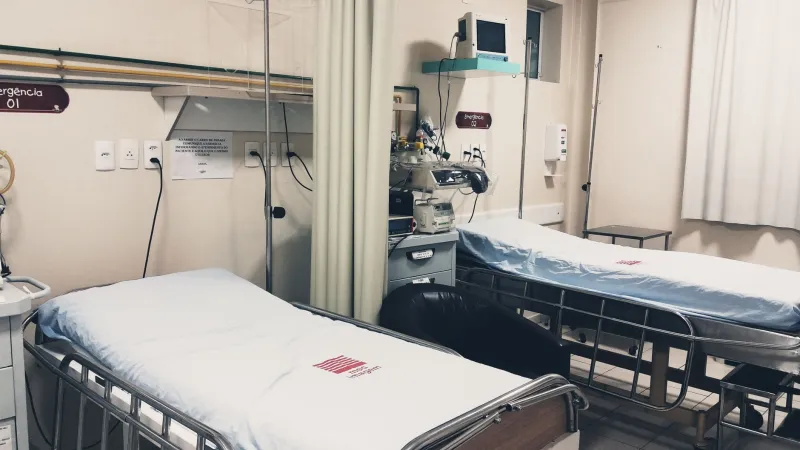
The ER as a Last Resort — and a System Under Strain
Every day, in hospitals from rural Montana to downtown Miami, emergency physicians encounter the same quietly devastating scenario: a patient arrives in serious condition with a diagnosis that carries a familiar, unspoken subtext — this did not have to happen today.
A 2022 analysis published in the Annals of Emergency Medicine found that a significant proportion of emergency department visits involve conditions classified as "avoidable" — meaning timely outpatient care or routine screening could have intercepted the crisis before it escalated. The Centers for Disease Control and Prevention estimates that nearly 90% of type 2 diabetes cases are preceded by a detectable prediabetes window lasting years. Yet more than 80% of people with prediabetes remain undiagnosed. For colorectal cancer, the American Cancer Society notes that survival rates exceed 90% when the disease is caught at its earliest stage — a stage detectable through colonoscopy — but drop to below 15% when the cancer has spread.
The emergency room, designed for acute trauma and genuine medical crises, has become the de facto primary care setting for millions of Americans who arrive not because their condition appeared suddenly, but because every earlier opportunity to catch it was missed.
The Anatomy of a Delayed Diagnosis
Patient stories collected by community health advocates illustrate a pattern that is both deeply personal and disturbingly common.
Consider the profile of a 54-year-old warehouse supervisor in Ohio — uninsured for three years following a job change — who dismissed persistent fatigue and occasional chest tightness as the inevitable byproduct of shift work and stress. When he arrived at an emergency department by ambulance, he had already experienced significant cardiac damage. His cardiologist later told him the condition had been developing for at least two years. A single screening appointment could have changed his trajectory entirely.
This is not an outlier. It is a pattern. And the pattern has a structure.
Health researchers identify three primary categories of delay: system-level barriers, financial barriers, and psychological barriers. Each one operates independently. Together, they form a compounding wall between a person and the care that could protect them.
System-Level Barriers: When the Infrastructure Fails First
In many parts of the United States, access to a primary care physician is itself a logistical challenge. The Association of American Medical Colleges projects a shortage of up to 86,000 physicians by 2036, with primary care among the most acutely affected specialties. In rural counties, residents may travel 60 miles or more to reach the nearest clinic offering preventive services.
Appointment availability compounds the problem. A 2023 report from Merritt Hawkins found that average wait times for a new-patient appointment with a family medicine physician in major metropolitan areas exceeded three weeks. For someone experiencing a mild but meaningful symptom — the kind that warrants attention but does not feel urgent — that wait time is often enough to tip the decision toward "I'll deal with it later."
Later, too often, becomes never. Until the emergency room forces the issue.
Financial Barriers: The Cost of Not Going
The economics of avoidance are perverse. Patients who delay care to avoid the cost of a screening appointment frequently end up incurring expenses that are orders of magnitude greater.
The average cost of an emergency department visit in the United States now exceeds $2,600, according to data from the Healthcare Cost and Utilization Project. A hospitalization for a preventable condition such as uncontrolled hypertension or advanced-stage pneumonia can run tens of thousands of dollars. By contrast, a routine blood pressure screening costs nothing at most pharmacies, and colonoscopy is covered without cost-sharing under the Affordable Care Act for eligible patients.
Yet the upfront, tangible fear of a copay or a bill frequently outweighs the abstract, future possibility of a serious illness. This is not irrationality — it is a very human response to economic precarity. But it is a calculus that, without intervention, continues to fill emergency waiting rooms with people whose conditions were entirely preventable.
Psychological Barriers: The Silence of Denial
Perhaps the most underappreciated obstacle is internal. Health psychologists refer to it as "illness anxiety avoidance" — the tendency to sidestep medical evaluation not because one does not suspect something is wrong, but precisely because one does.
Knowing can feel more frightening than not knowing. This is particularly pronounced in communities with historical reasons to distrust the medical system, including many Black and Indigenous communities where documented inequities in care have understandably eroded confidence in health institutions. But the avoidance pattern extends across demographics, affecting educated, insured, otherwise health-conscious individuals who simply cannot bring themselves to make the appointment.
The irony, of course, is that the knowledge gained from early screening almost always improves outcomes — and frequently delivers reassurance rather than alarm.
Identifying Your Early Warning Window
The most actionable concept in preventive medicine may be one that receives surprisingly little public attention: the early warning window. This is the period — often spanning months or years — during which a developing condition is detectable, manageable, and frequently reversible, before it reaches the threshold that demands emergency intervention.
Every major chronic condition has one. Hypertension has a long, silent early phase. Type 2 diabetes is preceded by prediabetes. Many cancers have precursor states visible on standard screenings. Heart disease accumulates measurable risk factors long before a cardiac event occurs.
To identify your own early warning window, start with three questions:
1. When did you last have a baseline established? Blood pressure, blood glucose, cholesterol, and body mass index are four data points that, taken together, can reveal developing conditions before symptoms appear. If you cannot recall your last readings, that gap is itself a signal.
2. Are you current on age-appropriate screenings? The U.S. Preventive Services Task Force maintains free, publicly available guidelines at uspreventiveservicestaskforce.org. These recommendations are calibrated by age and risk factor, and they identify the specific screenings most likely to catch conditions in their earliest stages.
3. Have you noticed anything you have been meaning to mention to a doctor? That mental list — the fatigue, the occasional shortness of breath, the mole that changed shape — is not something to carry indefinitely. It is a queue of potential early warnings waiting for clinical evaluation.
The Waiting Room You Choose
There are two waiting rooms in American health care. One is the comfortable, scheduled waiting room of a primary care office or screening clinic. The other is the fluorescent-lit, high-stakes environment of an emergency department at two in the morning.
The conditions that send people to the second are, in a remarkable number of cases, detectable in the first — if the appointment is made, the screening is scheduled, and the early warning window is honored rather than ignored.
See it early. Stop it before it starts. The waiting room you enter today may determine whether you ever need to enter the other one.