Nobody Said Anything: How Family Silence Is Letting Preventable Illness Win
A Familiar Scene With an Unfamiliar Consequence
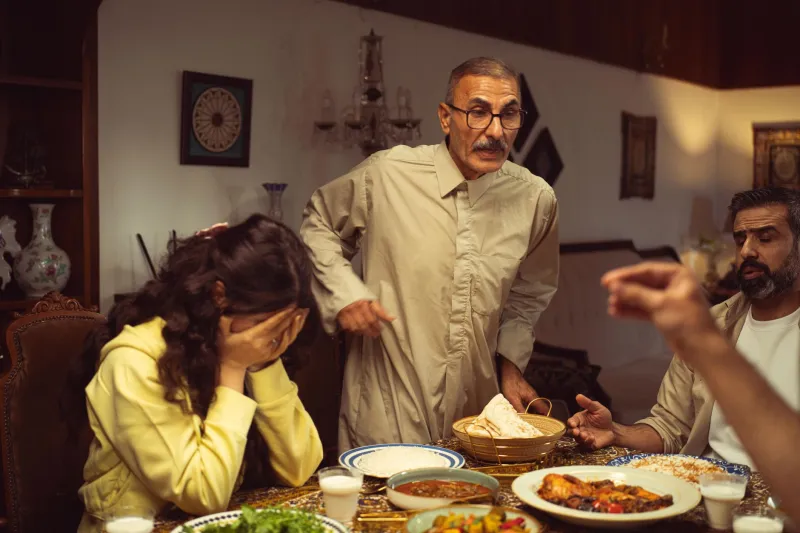
Picture a Sunday dinner. Someone at the table has lost a noticeable amount of weight in the past two months — not the kind earned through a new fitness routine, but the kind that hollows the face and slackens the collar. Everyone at the table sees it. A few exchange glances. Someone thinks, I should say something. Someone else thinks, Surely her husband will bring it up. Her husband thinks, I don't want to alarm her. I'm sure it's nothing.
Nothing is said.
Three months later, she is diagnosed with a gastrointestinal malignancy that, according to her oncologist, had been developing for well over a year.
This is not a hypothetical constructed for dramatic effect. Variations of this story are reported by clinicians across the country with quiet, persistent regularity. And the psychological mechanism driving it has a name that most people associate with strangers on a subway platform, not with the people they love most.
The Bystander Effect Does Not Stay in Public
In 1968, social psychologists John Darley and Bibb Latané introduced the concept of the bystander effect following their research into the tragic 1964 murder of Kitty Genovese in New York City. Their core finding: the more witnesses present during an emergency, the less likely any individual witness is to intervene. Responsibility diffuses across the group. Everyone assumes someone else will act.
Decades of subsequent research have confirmed and extended this finding across diverse contexts. What has received considerably less attention is its operation within intimate social units — specifically, the family.
Families, it turns out, are not immune to diffusion of responsibility. In some ways, they are more vulnerable to it. The emotional stakes are higher. The fear of causing offense or panic is greater. The social norms around bodily privacy and personal autonomy are deeply embedded. And the assumption that someone closer to the situation — a spouse, an adult child, a sibling who lives in the same city — will raise the concern is both entirely understandable and potentially catastrophic.
Why Love Makes It Harder to Speak
The silence that surrounds health concerns within families is rarely indifference. More often, it is the product of love expressing itself in precisely the wrong direction.
A 2019 study published in the Journal of Health Communication found that family members frequently identified health warning signs in relatives but withheld concern to avoid damaging the relationship, being perceived as alarmist, or causing the relative distress. The researchers noted a painful irony: the stronger the relationship, the more the observer tended to self-censor.
Add to this the cultural dimensions. In many American communities — whether shaped by stoicism, privacy norms, religious faith, or historical experiences with medical institutions — discussing health openly carries its own set of barriers. In some families, raising a health concern feels like an accusation. In others, it feels like tempting fate. In still others, it simply has no established script.
The result is collective inaction dressed as consideration. And while everyone waits for someone else to say something, the window for early intervention quietly closes.
What Delayed Conversations Cost
The public health stakes of family silence are not abstract. Research consistently demonstrates that early-stage diagnoses — across cancer, cardiovascular disease, diabetes, and mental health conditions — yield dramatically better outcomes than late-stage discoveries. The National Cancer Institute reports that five-year survival rates for breast cancer detected at the localized stage exceed 99%. At the distant stage, that figure falls below 30%.
For many patients who receive a late-stage diagnosis, the medical record reveals a timeline of visible symptoms that predated the crisis by a year or more. And for a significant portion of those patients, the symptom was noticed by someone else first.
The conversation that did not happen is, in a very real sense, a clinical event that did not happen.
Breaking the Silence: A Framework for Speaking Up
The good news is that the bystander effect, once named and understood, can be interrupted. Research in social psychology shows that individuals who are aware of the diffusion-of-responsibility dynamic are significantly more likely to act. Naming the mechanism is itself a form of inoculation.
For families, the additional challenge is finding language that opens a door rather than slamming one. Below are specific, tested approaches for raising a health concern with someone you care about — without triggering defensiveness or panic.
Lead with observation, not conclusion. Rather than saying, "I think something is wrong with you," try: "I've noticed you seem more tired than usual lately, and I've been thinking about you. Have you had a chance to talk to your doctor recently?" This positions you as an attentive, caring presence rather than an alarmist.
Use the first person to carry the concern. Framing the conversation around your own worry rather than their condition reduces the sense of being scrutinized. "I'd feel a lot better if you got that checked out — it would put my mind at ease." This is not manipulation; it is an honest expression of care that also lowers the emotional temperature.
Normalize the action, not just the concern. Connecting the conversation to routine health behavior reduces the implicit suggestion that something is seriously wrong. "I've been trying to get better about my own checkups — would you want to make appointments together?" Shared action removes the spotlight from the individual.
Say it more than once. A single mention, gently deflected, is easy to let pass. A pattern of quiet, consistent concern — raised without pressure but without abandonment — is harder to dismiss. You are not nagging. You are staying present.
Know when to escalate. If the concern is serious and the person is declining all conversation, it may be appropriate to involve their primary care physician directly, particularly if you are a legal caregiver or close family member. Many practices welcome a brief, confidential note from a family member flagging a concern, even if the patient does not raise it themselves.
The Responsibility That Belongs to All of Us
Public health campaigns invest heavily in encouraging individuals to know their own numbers, schedule their own screenings, and listen to their own bodies. This is essential work. But it addresses only one half of the early detection equation.
The other half is relational. It lives in the moments when someone who loves you notices what you cannot or will not see in yourself — and chooses to say something rather than wait for someone else to.
The bystander effect is not an inevitable feature of human nature. It is a tendency, and tendencies can be resisted. At kitchen tables and holiday gatherings and casual phone calls across America, there are conversations that have not happened yet — conversations that could change a diagnosis, a prognosis, and a life.
Do not wait for someone else to have them.
See it. Say it. Stop it while there is still time.